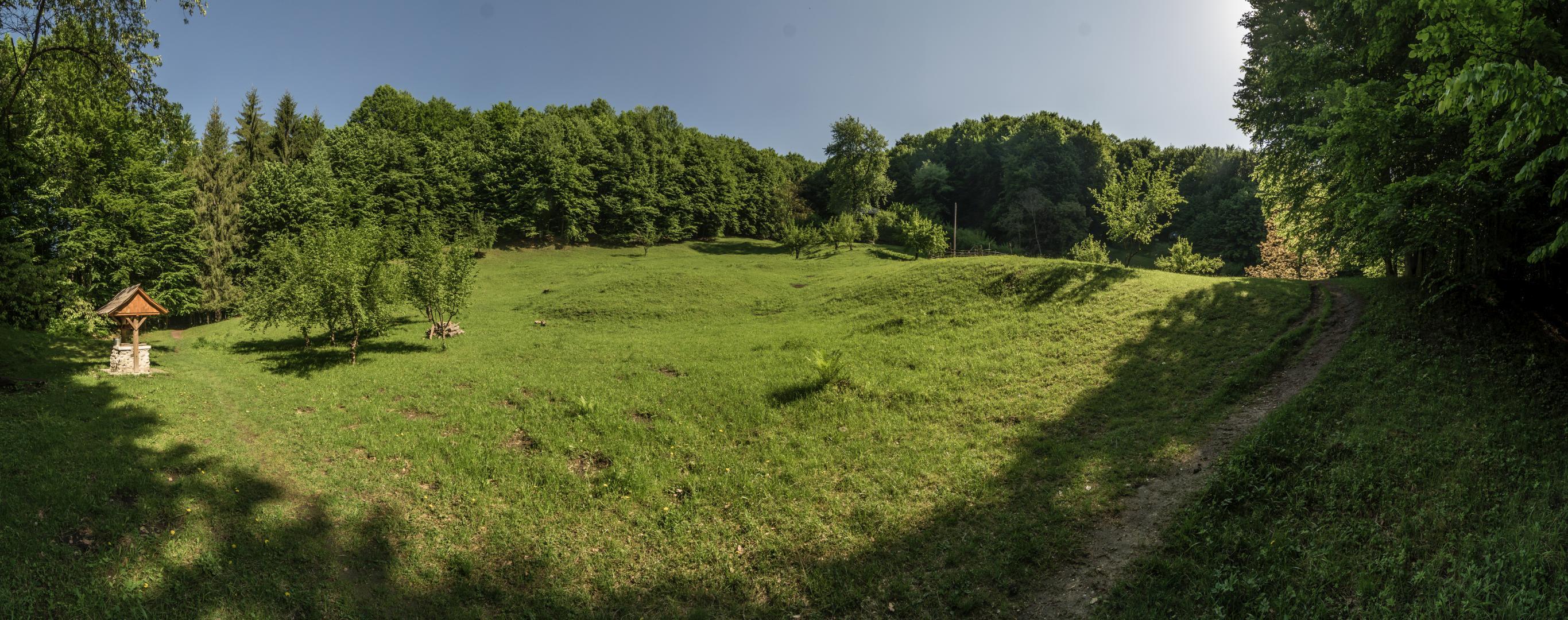
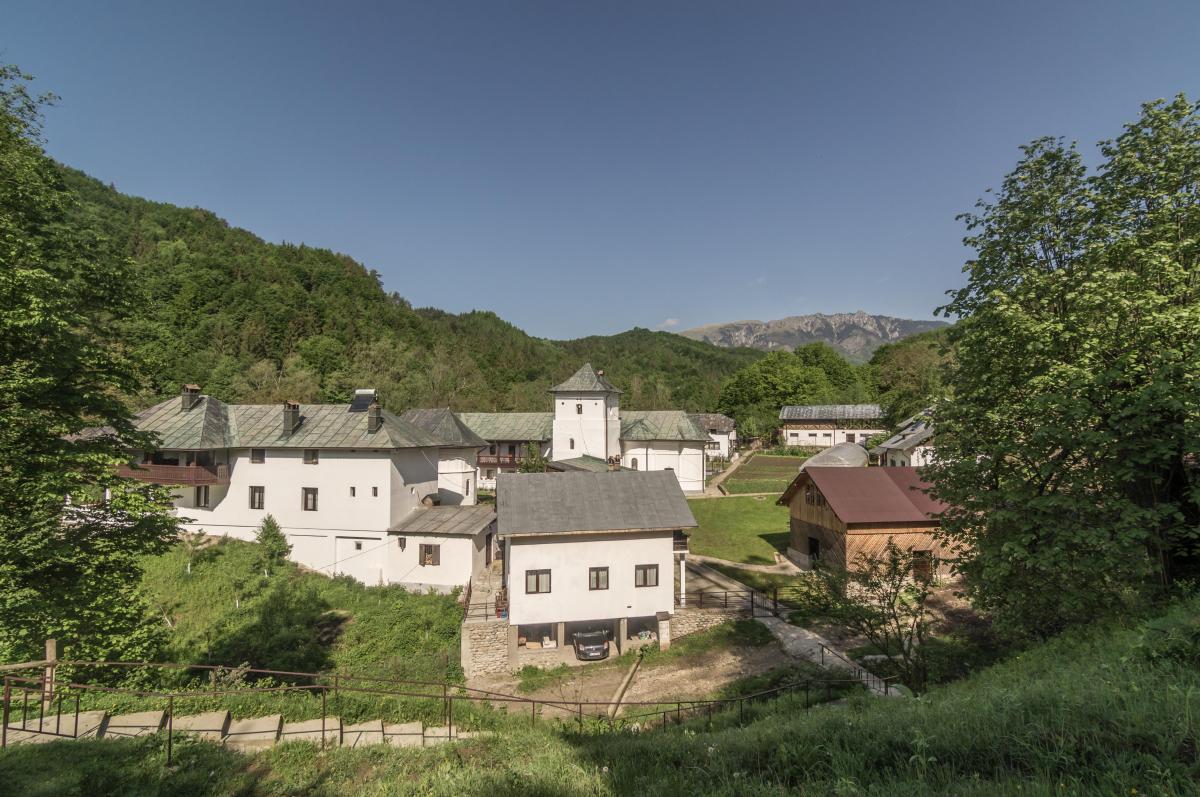
Located in a clearing where in ancient times there was a small iezer (mountain lake) from which it took its name, the Iezer Monastery is considered one of the most isolated monastic centers in the north of Oltenia. The first readers mentioned in pomelnic are voivodes Radu I 1377-1380 and his son Mircea the Elder 1386-1418, who chose this beautiful area as a place of reading, protected by high mountains, difficult to access and in times of restriction safe shelter from enemies . With the passage of time, the Iezer Hermitage became obsolete and deteriorated, being rebuilt by voivode Mircea Ciobanul 1545-1554, together with his wife, Mrs. Chiajna, daughter of ruler Petru Rareș 1527-1547.
Between the years 1552-1553, the stone church was built and the patron saint of the Entry into the church of the Mother of God was changed, but the works were finished in the years 1567-1568, after the founder's death, by his wife.
Two historical testimonies speak of the devastation of the Yezer Hermitage, as a result of which its inhabitants were martyred
The hieromonk Chiriac Râmniceanu narrates the following: events heard in 1856 from the mouth of the old Ștefan the hieromonk, the then abbot of the hermitage: because the same gentleman mentioned above, Mircea, having 2 daughters and marrying the younger one before the older one, was disgusted older girl and running away from his father Mircea Vodă in the Hungarian country, he married a German Hungarian, a great pagan. The girl also knew that her father Mircea Vodă had built this monastery endowed with estates and other necessary things, even with a cauldron of money placed on the wall of the Iezerul monastery, for when the monastery would be destroyed, finding itself it is done on the spot. So being distressed at her father, she told about the monastery to her husband, where she also buried the money and he started from there like a tyrant coming over the German mountains and arriving at that deserted place, the monk fathers and whom they found they cut him to pieces and razed the whole monastery to the ground, looking for that money and finding it, they took it and he left for his country.
Alexandru Odobescu in his work Opere volume II Writings from the years 1861-1870 we say the following: near Iezer it is said that there were gold mines exploited by the Saxons from Transylvania. Tradition says that Mihai Vodă the Brave himself left the reserve of his treasury in Iezer, before leaving for the war in Transylvania, and that after he was killed on the Turzii Plain, the monastery was devastated by foreign invaders, who killed 300 monks who lived at that time, but they took with them the treasures hidden by Mihai at Jezer.
Regardless of the reason for which the monks were killed and the hermitage deserted, it is said that the inhabitants of the village took the bodies of the martyrs and buried them downstream of the hermitage, approximately 500 m, on the bed of the Cheia river, carving 3 crosses in the rock in memory of the martyrs between of which only 2 are still seen today. The place is still called Crucile Mosilor today.
In the course of time, the hermitage deteriorated, being abandoned several times. In the writing from 1720 it is mentioned that in 1700 the hermitage was deserted and broken. The restoration of the Izer was to take place between the years 1693-1705, the founder being the pious Antonie Schimonah, as the inscription on the church wall says, this holy church where the Vovidenia is celebrated, made from the First Reverend Mircea Voivod with Mrs. Chiajna in 1530 and through the passing of the times from indolence, they were surprised and later the God-loving Chir IIlarion became a bishop, helping Antonie Schimonah in the days of Damaschin Bishop of Râmnicu, they were painted and beautified by the humble among the hieromonks Kir Nicolae leat 7132(1714 ).
Schimonah Antonie, born of Aromanian parents, in 1628, in Ianina, the land of Pindus in the south of the Danube, came to Wallachia in 1640 and settled in Râmnicu Vâlcea. Engaging in commerce and reaching the age of 64, blessed Antonie decided to choose the monastic path. After giving up the idea of going to Mount Athos, at the urging of Bishop Hilarion, the pious man settled at the Yezer Hermitage, rebuilding the church and the cells, some of which are still preserved today. In the western part of the church there is a spacious basement for storing food.
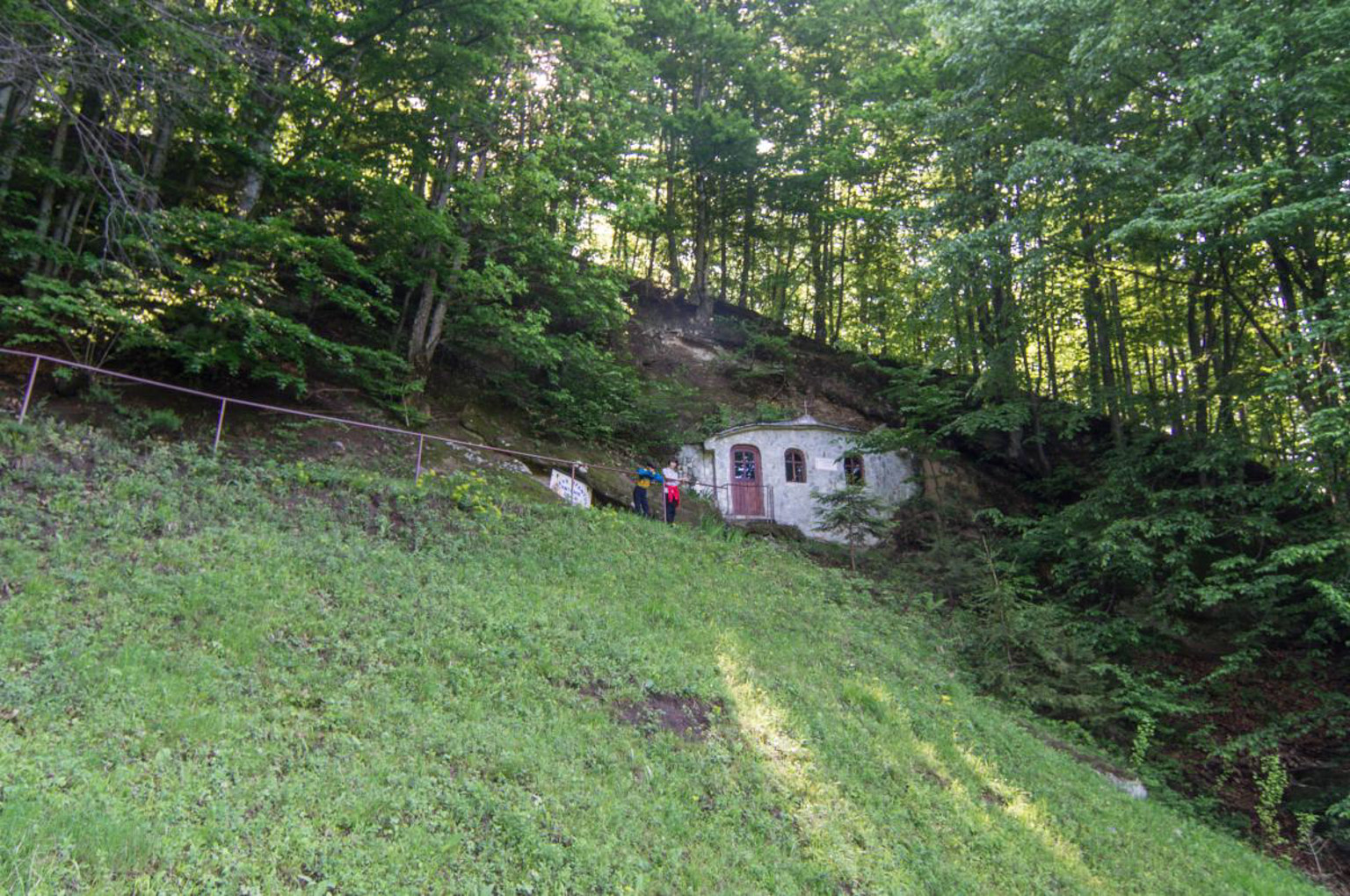
After rebuilding the hermitage and putting the community in order, St. Anthony retreated to the desert, living in the cave he himself dug in the rock, in severe hardships, until his transition to eternal life in 1720.
Between 1865-1870 Hieromonk Dositei Cheianul restored the church, as it had begun to fall into disrepair. The abbot, with the blessing of Bishop Iosif Bobulescu, also carried out other works such as the restoration of the painting and the furnishing of furniture, as can be seen from the inscription then placed outside above the door on the left side.
Between the years 1900-1912 during the time of Bishop Ghenadie, the foundation being in poverty, the protosinghel Lascu paints the altar entirely, raises the stone and brick belfry, where he places 2 bells, repairs the cells, also making other household improvements.
Until 1945, when the last abbot, hieromonk Nicodim, died, the Iezer Hermitage was maintained by a small monastic staff living in only 2 cells, after which the hermitage will remain deserted.
In 1946, the hermitage was repopulated with nuns brought from the Sărăcinești Monastery, entrusting the management of the hermitage. It was also then that improvements were made to the church and old buildings and outbuildings were added.
Between the years 1982-1983, at the expense of the bishopric, the building on the southern side of the monastic complex was restored, and between the years 1996-1998, with the support of the governor of the National Bank of Romania, Mugur Isărescu, a new, more spacious church was built, dedicated to the Transfiguration of the Lord and Saint Pious Anthony of Jezer.
At Crucile Moșilor, a wooden trestle was erected in 1999 and in 2009 it was replaced by a stone one.
Downstream from the cave is a spring whose water was used by Saint Anthony for his daily needs, this water being well known for its curative properties. Hidden by the forest and unknown to the pilgrims who came to the cave, the spring was brought in the year 2000 to the forest road for a distance of about 400 m to be useful to thirsty hikers, watched over by the icon Izvorul Tămăduirii raised on this occasion.
The community of the holy monastery is currently led by Mother Abbess Stavrophora Mihaela Popa, being made up of 28 living women.
Text taken from the history of the monastery displayed at the entrance