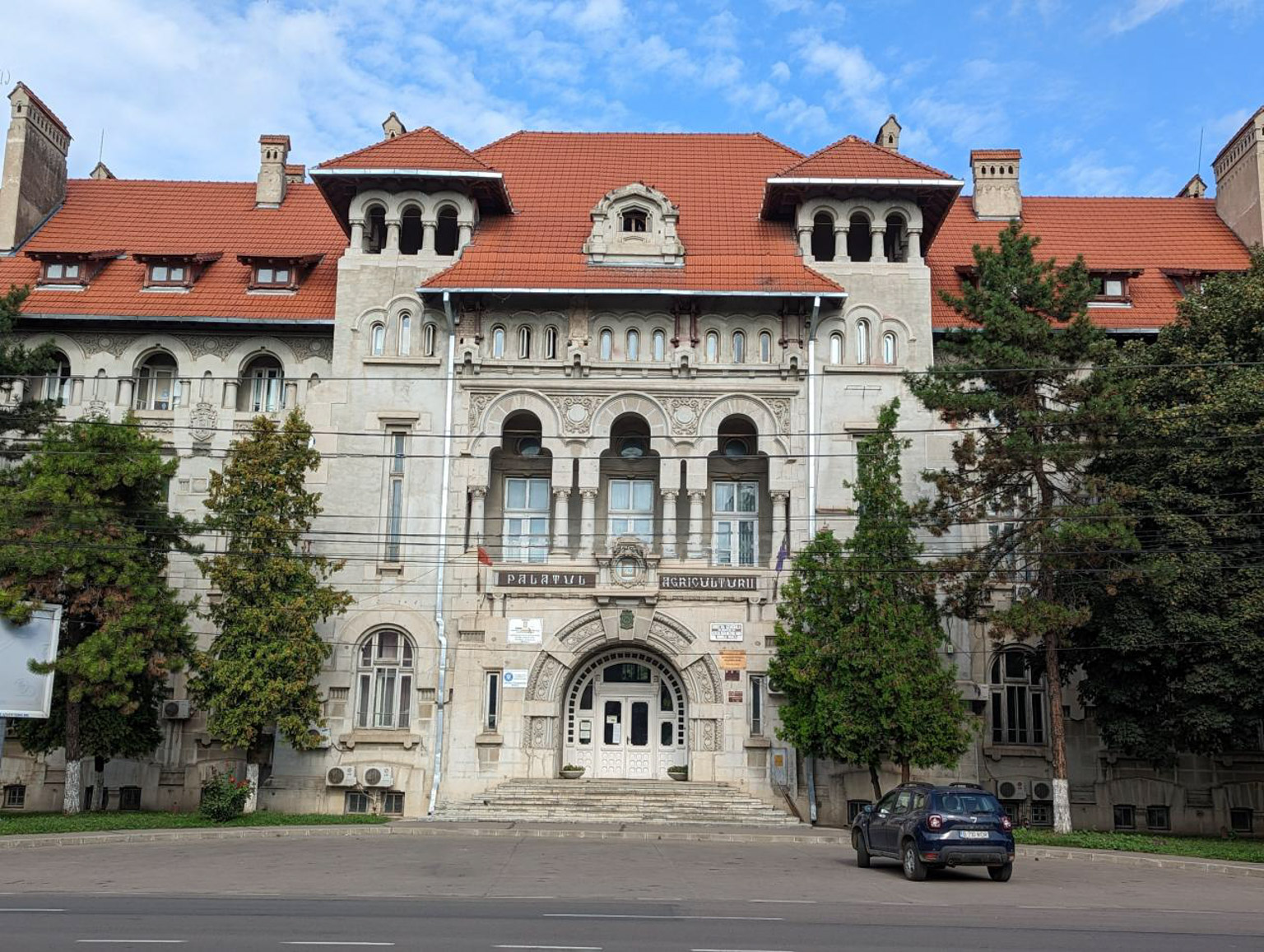
The Palace of Agriculture, built in the 1920s, is a remarkable example of neo-Romanian architecture, reflecting rustic influences specific to the Romanian village. The building hosted the famous European wheat exchange, which gives it a special symbolic value. This imposing construction remains to this day a symbol of Brăila and a tribute to the Bărăgani peasant.
The construction work of the Palace of Agriculture began on July 15, 1923 and was completed in 1929, a period in which Brăila was the center where the price of cereals was established at a European level. The initiative to erect this building belonged to Prefect Șerban Răducanu, supported by the Minister of Agriculture Alexandru Constantinescu. The financing was provided in part by the contribution of the peasants who had been privatized.
The palace was conceived as a complex architectural ensemble, intended to house a museum dedicated to Romanian agriculture and, in particular, to the products specific to Bărăgan. At the same time, the building provided space for conferences and official meetings and brought together under one roof all the institutions in Brăila subordinated to the Ministry of Agriculture and Domains. From an architectural point of view, the building includes all the elements specific to the neo-Romanian style: pavilions with semicircular arches, loggias, porches, decorative panels in relief and tall chimneys.
There is a theory according to which the equestrian statue of King Carol I was once placed in front of the Palace of Agriculture and was later buried in the area. In 2007, a county councilor stated that he had seen the statue in that location with his own eyes and requested the initiation of archaeological research to verify this hypothesis. It is assumed that the statue was hidden during World War II, when the Soviet army established its headquarters in the palace. However, all research, including those with modern equipment, did not lead to any discovery confirming the existence of the statue.
The director of the Brăila Museum, university professor Ionel Cândea, expressed his skepticism towards this story since 2007. He stated that he never believed in the existence of the statue of King Carol I in front of the Palace of Agriculture and that any archaeological excavations would require high costs. According to known information, in front of the building there was only the bust of the Minister of Agriculture who laid the foundation stone of the palace.
The Palace of Agriculture in Brăila is an imposing building, with a basement, ground floor and two floors, totaling 122 rooms. Over time, the Chamber of Agriculture and the Agricultural Museum, the Agricultural Inspectorate, the Veterinary Inspectorate and the Cadastre of the Lower Danube Region, as well as other specialized services, operated here. The director of the Chamber of Agriculture, the head of the Agricultural Service, two officials, the superintendent and auxiliary staff lived in the same building.
Sursa: adevarul.ro